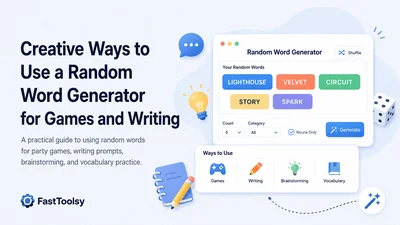
A blank page or a quiet room full of people waiting for the game to start can both stall on the same problem: nobody knows where to begin. A simple list of unrelated words is a surprisingly powerful fix, and the Random Word Generator turns that idea into a one-click habit. This guide walks through the most useful and most fun ways to put random words to work, and shows how to set the count and filters so the output fits each situation instead of fighting it.
Why random words spark ideas
Your brain is good at connecting things, but it needs raw material to connect. When you stare at a topic you already know well, you keep circling the same obvious thoughts. An unexpected word forces a fresh link: "lighthouse," "velvet," or "circuit" suddenly has to fit into your story, your brand, or your argument. That friction is the whole point. The words do not give you the answer; they knock you off the path you were stuck on.
Because the output is unpredictable, the way you configure it matters. A single word is great for a quick prompt. A batch of ten or twenty is better for games and rapid brainstorming. Filtering by length or part of speech, where available, lets you match the difficulty of a game or the tone of a writing exercise.
Party and word games you can run in minutes
You do not need a boxed set to play. With a phone or laptop and a generator, you can start almost any group game on the spot. Here are a few that travel well:
- Describe it, do not say it. Generate one word per round. The active player describes it without using the word itself while the team guesses against a timer.
- Story relay. Generate five or six words and pass them around the group. Each person adds a sentence to a shared story that must use the next word in order.
- Categories race. Generate a word, then everyone races to name something in a set category that starts with the same letter.
- Drawing telephone. One word becomes a sketch, the next person guesses, draws again, and so on.
To set up a smooth random word generator game, generate a batch of words before you begin so there is no waiting between rounds, and pick a count that matches your group size. For mixed-age groups, choose shorter, more common words; for a tougher round, lean on longer or less familiar ones.
Keeping score and adding structure
If you want a leaderboard or randomized turn order, pair the words with a Random Number Generator to assign points, pick who goes first, or set the number of words each round uses. That small bit of randomness keeps games feeling fair and unpredictable.
Writing prompts and beating the blank page
Writers have used constraint as fuel for a long time, and a random word is the lightest constraint there is. Try these approaches when you sit down to write:
- Single-word sprint. Generate one word and write for ten minutes without stopping, working the word in wherever it lands.
- Three-word scene. Pull three words and write a short scene that connects all of them naturally.
- Title bait. Generate a handful of words and combine two of them into an unexpected title, then write toward it.
- Character spark. Use one word as a defining trait, object, or fear for a new character.
When you finish a draft, it helps to know how much you actually produced. Drop the text into the Word Counter to track sprint length and build a daily writing habit you can measure.
Brainstorming for work and creative projects
Random words shine in group brainstorming, where the goal is volume before judgment. A common technique is forced association: write your real problem in the center of a page, generate a word, and list every connection between that word and the problem, even the silly ones. The point is to break the obvious patterns your team keeps returning to.
- Generate a fresh word each time the discussion stalls.
- Set a higher count when you want a wall of options to react to.
- Use words as random tags to cluster sticky notes into unexpected groupings.
If you are mocking up a layout, pitch deck, or product page while ideas are still loose, you can fill the empty text areas with placeholder copy from the Lorem Ipsum Generator so the design conversation does not get stuck on wording too early.
Vocabulary practice and language learning
Random words are a low-pressure way to grow a vocabulary. For learners, the unpredictability mimics real life, where you rarely get to choose which word comes next.
- Generate a small set of words at the start of a study session.
- For each one, write a definition from memory, then check it.
- Compose one original sentence per word so the meaning sticks in context.
- Revisit yesterday's words before generating today's to reinforce recall.
Teachers can scale this up for a class: generate one batch, project it, and have everyone respond. Adjust the count and, where filters allow, the word length to match the level of the group.
Naming projects, characters, and brands
Naming is hard because you are searching a space you cannot see. Random words give you starting points you would never have typed yourself. Generate a batch, then play with the results:
- Combine two words into a compound name.
- Keep a word that captures the right feeling and build variations around it.
- Use a word as a code name for a project until the real name arrives.
If you want to stress-test a name or a slogan by seeing it repeated across a layout, the Text Repeater can duplicate a line quickly so you can judge how it reads in bulk.
Setting count and filters for each use
Matching the output to the task is what makes random words genuinely useful instead of just chaotic. A quick reference:
- One word for a focused writing prompt or a single game round.
- Three to five words for scenes, story relays, and forced-association brainstorming.
- Ten or more words for game prep, vocabulary lists, and naming sessions where you want plenty to choose from.
- Length and type filters, where available, to make a game easier or harder, or to match a learner's level.
Related tools & toolkits
To build a full writing and idea workflow, pair the Random Word Generator with the Word Counter for tracking output, the Lorem Ipsum Generator for placeholder text, the Random Number Generator for scoring and turn order, and the Text Repeater for duplicating lines. Explore the curated Writing Toolkit, browse All Toolkits, or start from the FastToolsy homepage.
Frequently Asked Questions
What is a random word generator used for?
It produces unrelated words on demand, which people use for word games, writing prompts, brainstorming, vocabulary practice, and finding starting points when naming projects or characters. The unpredictability is what helps you break out of familiar thinking.
How do I run a random word generator game with a group?
Generate a batch of words before you start so there is no waiting between rounds, then run a simple format like describe-it or a story relay. Use shorter, common words for mixed groups and longer ones for a harder challenge.
How many words should I generate at once?
Use one word for a focused prompt or single round, three to five for scenes and brainstorming, and ten or more for game prep, vocabulary lists, or naming when you want plenty of options to react to.
Can random words really help with writer's block?
Often, yes. A blank page gives your brain nothing to push against, while an unexpected word forces a fresh connection. Even if the first word does not fit, generating another one usually shakes something loose.
Are random words useful for learning vocabulary?
They are a low-pressure way to practice. Generate a small set, define each word from memory, write an original sentence, and revisit them later. The randomness mirrors how words appear unpredictably in real conversation.
طرق إبداعية لاستخدام مولد كلمات عشوائية في الألعاب والكتابة
سواء كنت تواجه صفحة فارغة أو مجموعة من الأصدقاء تنتظر بدء لعبة، فإن المشكلة واحدة غالبا: لا أحد يعرف من أين يبدأ. قائمة بسيطة من الكلمات غير المترابطة هي حل فعال بشكل مدهش، ويحول مولد كلمات عشوائية هذه الفكرة إلى عادة بضغطة واحدة. في هذا الدليل نستعرض أكثر الاستخدامات فائدة ومتعة، مع نصائح حول ضبط العدد والفلاتر لتناسب كل موقف.
لماذا تثير الكلمات العشوائية الأفكار؟
عقلك بارع في ربط الأشياء، لكنه يحتاج إلى مادة خام ليربط بينها. عندما تحدق في موضوع تعرفه جيدا، تظل تدور حول نفس الأفكار الواضحة. تجبرك كلمة غير متوقعة مثل "منارة" أو "دائرة" على إيجاد رابط جديد، وهذا الاحتكاك هو جوهر الفكرة. الكلمات لا تمنحك الإجابة، لكنها تخرجك من المسار الذي علقت فيه.
ولأن الناتج غير متوقع، فإن طريقة ضبطه مهمة. كلمة واحدة مثالية لمحفز سريع، ودفعة من عشر أو عشرين كلمة أفضل للألعاب والعصف الذهني السريع. كما تتيح لك الفلترة حسب الطول مطابقة صعوبة اللعبة أو مستوى المتعلم.
ألعاب جماعية تبدأ في دقائق
لا تحتاج إلى علبة لعبة جاهزة. بهاتف أو حاسوب ومولد كلمات، يمكنك بدء معظم الألعاب الجماعية فورا. جرب الصيغ التالية:
- صفها دون ذكرها: أنشئ كلمة لكل جولة، ويصفها اللاعب لفريقه دون نطقها بينما يخمنون قبل انتهاء الوقت.
- سباق الفئات: أنشئ كلمة، ثم يتسابق الجميع لذكر شيء ضمن فئة محددة يبدأ بالحرف نفسه.
- قصة متسلسلة: أنشئ خمس كلمات يمررها الجميع، ويضيف كل شخص جملة تستخدم الكلمة التالية بالترتيب.
لتنظيم لعبة سلسة، أنشئ دفعة من الكلمات قبل البدء حتى لا يكون هناك انتظار بين الجولات، واختر عددا يناسب حجم المجموعة.
محفزات الكتابة وتجاوز الصفحة الفارغة
القيد الخفيف وقود للكتاب، والكلمة العشوائية أخف قيد ممكن. خصص عشر دقائق واكتب دون توقف انطلاقا من كلمة واحدة، أو اسحب ثلاث كلمات واكتب مشهدا قصيرا يربط بينها. بعد الانتهاء، ضع نصك في Word Counter لتتبع طول كل جلسة كتابة وبناء عادة يومية يمكن قياسها.
العصف الذهني والتسمية
تتألق الكلمات العشوائية في العصف الذهني الجماعي حيث يكون الهدف هو الكمية قبل الحكم. اكتب مشكلتك في وسط الصفحة، ثم أنشئ كلمة وسجّل كل رابط يخطر ببالك بينها وبين المشكلة. وعند التسمية، أنشئ دفعة من الكلمات وادمج اثنتين منها في اسم مركب. ولاختبار شعار بصريا، يكرر Text Repeater السطر بسرعة لترى كيف يبدو بكثرة.
الأسئلة الشائعة
ما فائدة مولد الكلمات العشوائية؟
ينتج كلمات غير مترابطة عند الطلب، ويستخدمها الناس في ألعاب الكلمات ومحفزات الكتابة والعصف الذهني وتدريب المفردات وإيجاد نقاط بداية عند تسمية المشاريع أو الشخصيات.
كم عدد الكلمات التي ينبغي إنشاؤها مرة واحدة؟
استخدم كلمة واحدة لمحفز مركّز، وثلاثا إلى خمس للمشاهد والعصف الذهني، وعشرا أو أكثر لتجهيز الألعاب وقوائم المفردات وجلسات التسمية.
هل تساعد الكلمات العشوائية على تجاوز انسداد الكتابة؟
غالبا نعم. الصفحة الفارغة لا تمنح عقلك ما يدفعه، بينما تفرض كلمة غير متوقعة رابطا جديدا. وإن لم تناسب الكلمة الأولى، فإن إنشاء أخرى يحرّك الأفكار عادة.
هل الكلمات العشوائية مفيدة لتعلم المفردات؟
نعم، فهي وسيلة منخفضة الضغط للتدريب. أنشئ مجموعة صغيرة، وعرّف كل كلمة من الذاكرة، واكتب جملة أصلية بها، ثم راجعها لاحقا لترسيخها.